What’s next?


We’ve seen several waves of hardship for working families in the past eight months in many parts of the U.S.: mortgage foreclosures, job losses, reduction of hours of work, and pressure by employers on health benefits. And state governments around the country are under huge fiscal pressure, leading them to attempt to cut support for social programs and important social services. And many of those governments are themselves laying off state workers. So there is already an unprecedented level of economic and personal distress in the country.
But no one seems to think that we’ve seen the worst this recession has to offer. So what’s next?

One part of the story seems pretty clear. There will be more layoffs, more plant closures, and more business bankruptcies in the coming six months. So more families will suffer the pain and dislocation of job loss. The national unemployment rate is officially estimated at 8.5%, and economists expect it to rise above 10%. This means another two million job losses in the coming year or so. And each unemployed person affects several around him or her — dependent children, spouses, college-age children, even aging parents. That amounts to several million more people about to be affected. (Here’s a link to the Bureau of Labor Statistics.)

It also seems likely that many more people will lose their homes through foreclosure. (Here’s a recent map of mortgage delinquency rates based on data compiled by the New York Federal Reserve Bank.)

It would take more of an expert than me to try to guess what surprises await us in the financial sector — how many more failed banks, how long the credit drought will continue, how much resistance distressed home mortgage holders will meet in efforts to renegotiate their loans and try to keep their homes. But it doesn’t seem likely that banking and finance have seen the worst yet.

We can pretty well predict that services and support for urban poor people will diminish further, as state budgets contract along with the economy. And public health experts can probably estimate the effects that contraction will have, on the health and nutrition status of poor communities. And what happens to whole communities when unemployment benefits begin to run out? How will food pantries and private services cope with increasing urgent need?

And what about worker militancy? Isn’t it somewhat surprising that there hasn’t been more of an organized reaction in the United States to all these shocks by the ordinary people who are experiencing them? Is it possible that this passivity and acceptance will begin to change as the months of hardship wear on into years of reduced quality of life?

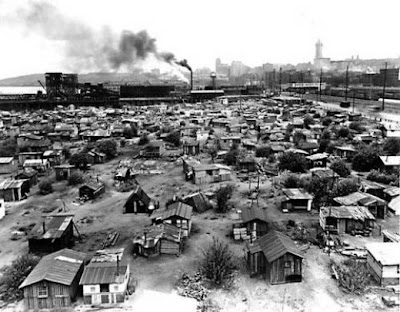
The photos above are from the 1930s, the period of the Great Depression. The point here isn’t that we’re approaching a similar time. It is simply that economic hardship is real, and it forces new kinds of social action and private strategies of self-preservation.

I suppose the hope everyone shares is that the economy will reignite. Demand will begin to recover; businesses will start to rehire workers; new investments will be made that result in productive innovations. And public revenues will begin to recover as well, as family incomes, business profits, and property values start to recover. So we’ll be able to pay for the social services we want and simple fairness demands.

Somehow, though, that recovery seems a long way off.
Impact of the crisis


We’re now months deep into a financial-economic-employment crisis across the country, and it’s especially severe in Michigan. What are some of the real impacts of this economic downturn on ordinary people?

The most visible impacts are on jobs and homes. Michigan’s unemployment rate has increased sharply in the past three months, to a current national high of 11.6 percent in January. There have been large layoffs in the auto-related industries in the state, and non-automotive businesses are now reducing their workforces as well as a result of reductions in business and consumer spending. Restaurants, retail shops, law firms, and accounting firms are eliminating positions, so job insecurity extends across the blue collar and white collar spectrum.

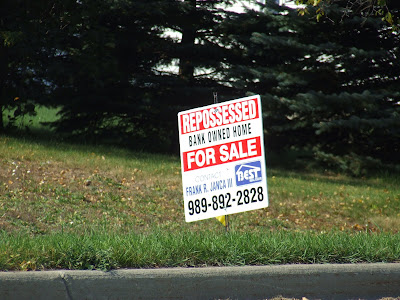
The loss of jobs feeds into a worsening mortgage foreclosure crisis in Michigan. Even before the surge on job losses Michigan had a high rate of troubled mortgages. That number now threatens to increase as a result of families’ loss of income, though there are a variety of new measures designed to help families to hold onto their homes.

A measure of the social distress for families in Michigan is the volume and nature of 2-1-1 calls that have been received over time. (2-1-1 is a growing national service in many areas that provides referrals to agencies and other resources for families and individuals facing difficult issues.) The United Way of Southeast Michigan provides detailed reporting of the volume, subjects, and demographics of its callers (link), and the results over the past 12 months are striking. Calls received in January 2009 are up by 30% compared to January 2008, at 22,518. The top five services for which referrals were provided included utility assistance, food, housing, temporary financial assistance, and employment. And emergency food providers such as Gleaners report a sharp increase in the amount of demand for their services in the past six months.

So how about the 80-85% percent of Michigan families who are still employed? (In addition to the 11.6% of people who are officially unemployed, there is a population of “hidden” unemployed people who are not counted in the official unemployment figures.) How has the crisis affected the majority who have not lost their jobs? It’s pretty clear that just about everyone in Michigan has been affected by the crisis. Anxieties about retirement investment accounts are at the top of the list — especially for people in their fifties or older. But a second major anxiety stems from job insecurity. With all the bad economic news, whose job will be the next to go? There is worry too about employers’ health benefits — will these benefits continue in their current form in the current economic environment? And these anxieties have led people to rethink their spending and consumption habits — leading, of course, to less demand in many sectors and perhaps another round of job reductions. Sales tax collections in Michigan fell by 18% in February from January; this is a direct indication of sharply reduced consumer spending (link). (Here is a report from the Chicago Federal Reserve Bank describing recent trends in Michigan retail sales.) And major purchases like automobiles and trucks seem to be on hold — witness the roughly 50% drop in demand for cars and trucks in recent months.

Another hardship that many families are experiencing is the frozen credit market and the stagnant home sales performance. Families who need to sell their homes are finding that there are few prospective buyers. And families looking to buy a home or a car may have substantial difficulty in finding a lender to provide the mortgage or car loan.

Add all these problems to a chronic American issue — the lack of medical insurance for upwards on 50 million Americans — and you have a rising financial and personal crisis for thousands of households in Michigan: how to pay for medical treatments when health benefits go away, or when you don’t have insurance at all. Unreimbursed care has increased sharply in hospitals in Michigan, resulting in severe financial pressures and the need for further cost-cutting; health systems in Michigan are currently laying off workers to adjust their budgets to current revenues.

So the impact of the current recession is sharply differentiated between people who have lost their jobs and those who haven’t. The first group is in serious, daily distress, having a hard time keeping their families provided with the necessities of life. The second group probably divides into segments with different levels and kinds of anxiety — those who have realistic fears of losing their jobs in the next wave of layoffs, those who are concerned that they may lose lose benefits or wages in the next year or so, and those who are anxious about the future value of their retirement savings. And it all adds up to a set of communities that are being forced to cope with a wide range of personal hardships, almost across the board.

Wealth in the United States

So how is wealth distributed spatially across the United States?

Here’s a quick effort at analyzing the Forbes list of the top 400 wealth holders in the U.S. Here is a snapshot of the graphic included on the page:

It is logical enough that there is a great concentration of these wealth holders in a few important cities — Chicago, Los Angeles, Dallas, Houston, San Francisco, New York, Boston. But this snapshot is of limited value in helping us get a handle on the social geography of wealth. It tracks only the very tip of the wealth iceberg.

We might take a different tack and try to use the concentration of million dollar homes across the United States as an index of the concentration of great wealth across space. Unfortunately, I can’t locate a convenient data source that provides this information — though it’s probably not too difficult to find. But here’s a related approach. The map provided below represents counties by their median home rental prices; this ought to be a reasonable proxy for house values. So we might reason that the highest home rental counties are also the counties with the highest income.

It would be interesting to see a series of maps on this theme along the lines of the treatment that Richard Florida offers for the spatial distribution of various salient social characteristics — for example, his maps of the distribution of different personality types across space.

Paying for health

picture-3

A person’s income determines his/her access to many things he wants and needs: food, clothing, transportation, housing, entertainment, and the internet, for example. And people who have higher income are able to consume more of all of these categories than people with lower income, if they choose to. More affluent people shop for food at Papa Joe’s or Whole Food; live in larger and more luxurious homes; buy their clothing from boutiques rather than Penny’s or the thrift shop; and drive multiple handsome cars. Poor people can’t afford the luxury end of these forms of consumption. And in some way our culture has judged that these sorts of inequalities of consumption are a legitimate and fair part of a market economy; if you judge that inequalities of income are justifiable (perhaps with some limits on extremes), then you pretty much have to support the idea of inequalities of consumption as well.

But what about goods that have a price but that are essential to living a decent human life? Food certainly falls in this category; if 30% of society could literally not afford to purchase enough calories to provide 2200-2900 calories per day for adults and 1800 calories for children, then we would probably have a different idea about the fairness of a market for food — the principle that says “to each according to his/her earning capacity” doesn’t seem very convincing in circumstances where it leads to malnutrition or starvation. In other words, if the normal workings of a market economy left a significant segment of the population without the ability to purchase enough food for subsistence, we would surely judge that this isn’t a fair or socially just way of distributing income and food. And there is an important point to be noted here: there is hunger in America, and the system of producing goods and income isn’t fully satisfying the subsistence needs of the whole population. (This is exactly what makes it compelling that our government needs to provide food assistance for the very poor, through food stamps or targeted income supplements.) So there is an important issue about the justice of current actual distributions of such basic goods as food, clothing, or shelter across the U.S. population.

But push a little deeper and consider the “market for health care”. Supporting one’s current healthy status is a costly effort; repairing the body in times of traumatic injury or serious illness is even more costly; and our society leaves a lot of the allocation of health care services to private purchasing power. Health insurance is the primary vehicle through which many Americans provide financially for their health care needs. Some people have insurance provided or subsidized through their employers; some families purchase health insurance through the private market; and many families lack health insurance entirely. Upwards on 45 million Americans are uninsured, including 20% of adults and 9% of children (CDC link). And this includes a wide range of Americans, from the extremely poor to the working poor to the solidly middle class.

It is clear that access to doctors, hospitals, nurses, and prescription drugs is a critical need that everyone faces at various points in life. It is obvious as well that one’s future ability to live and work productively and to enjoy a satisfying life is conditioned by one’s ability to gain access to health care when it is needed. It is also clear that uncertainty about the availability of health care is a major source of anxiety for many, many people in U.S. society today. So it is self-evident that decent health care is one of our most basic and unavoidable needs.

So what do people do when they lack health insurance and serious illness or injury occurs? This isn’t a mystery anymore; families go into debt to doctors and hospitals, they face bankruptcy, they find some limited sources of free care (free clinics, pro bono doctors’ services), and they forego “optional” treatments that may well extend the length or quality of life. And it is evident that this pattern results in very serious harms and limitations for people in these groups. People who have the least access to health care through our basic institutions may be expected to live shorter lives and to suffer more.

And what about people at the high end of the income spectrum? How do they relate to the problems of health? Here too the answers are fairly well known: they are able to seek out the best (and most expensive) specialists, travel to national centers for specialized treatment, and undergo advanced diagnostic tests that are not covered by insurance. (Here is a news story from CNN on boutique health care.) The affluent aren’t able to assure their health through expenditure — but they can certainly improve their odds.

In other words, ability to pay influences the quality and extent of health care that an individual or family is able to gain access to; and the health status of the family is affected by these variations in quality and access. So, to some meaningful extent, our social system places health care in the category of a market good.

But here is the question I’m working around to: what does justice require when it comes to health care? Is it right to look at health care as just another consumption good like shoes — affluent people wear Gucci and poor people wear Dollar Store, but everyone has his/her feet covered? Or is health care in a special category, too closely linked to living a full human life to allow it to be distributed so unequally?

It seems a bitter but unavoidable truth that there are very substantial inequalities in the provision of health care in our society. One person’s likelihood of surviving a devastating cancer may be significantly less than another person’s chances, simply based on the second person’s ability to pay for premium health care services. Further, it seems unavoidable that these inequalities are flatly unjust in any society that believes in the equal worth of all human beings. And where this seems to lead is to the conclusion that some system of universal health insurance is a fundamental requirement of justice.

Can America overcome racism?

The social and economic inequalities in America that are associated with race are staggering and persistent. Pick almost any category where you’d rather have more than less — income, health status, property and home ownership, likelihood of having health insurance, life expectancy, or likelihood of having a favorable outcome in the criminal justice system. In all of these categories there is a wide gap between black and white Americans. And this remains true even when we control for income — the health gap between white and black Americans earning more than $80,000 remains significant. So America has embedded a set of economic and social institutions that reproduce racial disadvantage. America remains a deeply racialized society.

These observations don’t necessarily amount to a conclusion about racist attitudes and deliberate discrimination on the part of most Americans. Attitudes and outcomes need to be distinguished. It is likely enough that there has been a lot of progress in conscious attitudes about race since 1950 for the majority of Americans. But persistent discriminatory outcomes can arise without explicit racist attitudes or discrimination on the part of specific individuals. Central examples of these forms of embedded “structural” mechanisms of racial discrimination include residential segregation and unequal educational opportunities for black and white children, based on where they live. Segregation certainly arose in part through deliberate efforts at excluding black people from certain neighborhoods — real estate “steering”, mortgage and insurance redlining, and overt violence and intimidation. But the mechanisms sustaining segregation today may well be more impersonal. The fact remains that patterns of racial residential segregation help to reproduce the kinds of racial inequality mentioned above.

These racial inequalities are also deeply intertwined with the social geography of major American cities. The concentration of poverty, racial isolation, poor schools, poor health facilities, and high crime rates create a multi-stranded social mechanism for reproducing racial inequality. It isn’t impossible for an African-American child to thrive and achieve in this environment — but it is certainly much harder. And the probabilities are stacked against her.

So, back to the main question: can America overcome its racism? Several things are necessary if this can happen.

First, we have to honestly face the facts — the outcomes mentioned above. We can’t delude ourselves by saying “the problems of race are finished in America” because we’ve elected an African-American president. The facts of racial difference in life outcomes need to be recognized, and we need to be vigilant in uncovering the mechanisms that lead to these disparities.

Second, we have to recognize why it is so important for our political culture that we address and resolve these continuing racial inequalities. Most fundamentally, we believe in equality — equality of worth and equality of opportunity. The persistent inequalities between black and white populations are a fundamental affront to these values. And we believe in democracy –but a democracy cannot thrive in circumstances of what amounts to two levels of citizenship.

But third, pragmatically, justice is a necessary component of social peace. Our country has seen violent outbreaks for over a century over the facts of contemporary race relations — Watts, Chicago, Detroit, Harlem, Miami. It is only enlightened prudence to realize that we must aggressively and consistently attack the institutional realities that reproduce racial disadvantage. Securing racial justice is a good investment in future social harmony.

Finally, we will need to have the resolve it takes to provide the resources necessary to assure genuine equality of opportunity for all Americans. This will be the work of a generation. But it will lay the basis for a more sustainable, harmonious, and productive society.

Poverty in the United States

There is a lot of poverty in the United States, and the regional patterns are striking. The map above represents 1998 data, and it tells a very sectional story about poverty in this country. (The map is presented by the Regional Development Institute of Northern Illinois University.) The largest concentration of poor counties is clearly in the deep south and in Appalachia. And it would appear that there is a high correspondence between poor counties and populations of minority Americans — Mexican-Americans in southwest Texas, Native Americans in the Dakotas and Arizona, and African-Americans throughout the south (Arkansas, Mississippi, Louisiana, and Alabama). The industrial midwest had relatively less poverty in 1998 (it will be urgent to see how this map changes once the restructuring of the automotive industry is complete). Even after the deindustrialization of many midwestern cities in the 1970s and 1980s the incidence of poverty at the county level remained relatively low. And the Boston-New York-Washington corridor shows one of the lowest levels of poverty — along with some of the highest population density in the country.

But what about the distribution of urban poverty in the United States? Here is a map of the metropolitan and micropolitan statistical areas of the United States (hosted by New Markets Tax Credit Resource Center).

Here is a map of poverty rates for Chicago in 2000 (host):
Here’s Houston:


And Detroit (% children under poverty in 1990):

What each of these metropolitan maps indicate is the very high concentration of poverty that exists in most American cities. And these patterns illustrate at the city level the same point noted above at the national level: that there is a very close correspondence between poverty and race.

It is time for a well-planned “war on poverty” once more. And let’s hope that the Obama administration will find the strategies and resources that are necessary to address these persistent patterns of poverty and inequality.

Social justice?

A major complaint that many people have had concerning the past eight years of the Bush administration is that it has had no interest in addressing issues of social justice in the United States. What are these issues? And what steps would a genuinely responsible government take to address them?

Here are a few core social justice issues that have become increasingly visible in the past eight years. Can we hope they will do better under the Obama administration?

  • Income inequality that has risen steeply since 1980
  • Disregard of the most basic human needs of poor people — e.g. the indifferent Katrina relief response
  • Serious race gaps in quality of life and economic opportunity that have held steady or worsened
  • A worsening healthcare crisis affecting 47 million uninsured people
  • A financial and economic meltdown that differentially hurts low and middle income people
  • Poor quality schools in high poverty areas
  • Deteriorating conditions in many American cities
  • Homelessness and hunger rising
  • Environmental harms that are disproportionately found in urban poor populations
  • Tax reforms that greatly privilege the most affluent
  • Mistreatment of immigrant communities

What these issues have in common is the fact of inequality across large social groups, and a profound lack of a fair level of priority offered by government to address the issue. The inequality part of the picture has to do with gross inequalities in resources, opportunities, dignity, and outcomes for different groups. And the priority issue has to do with “voice” — the degree to which claims by disadvantaged groups are taken seriously by policy makers. The rich and powerful have not had difficulty in gaining the ear of the Bush administration. But poor and middle-class people have knocked in vain.

Most generally, what might an Obama administration do to improve the situation of social justice in the United States? A first step — and it is an important one — is to give the signal to all parts of government that social justice is an important priority for this administration. This priority needs to affirm the centrality of equality, fairness, and a concern for improving the condition of the least-well-off in society. It is understood that every problem cannot be addressed at the same time, and that there are other important priorities as well. But social justice is generally compatible with other priorities, and it will be an important step forward to simply know that the government is concerned with these issues.

A related step that will further the cause of social justice will be to give voice to the disadvantaged within the process of policy formation. If poverty alleviation is to be back on the agenda, then make sure that the voices of poor people are heard as policies are formulated and discussed. And make sure that leaders are selected who have a genuine and innovative commitment to change. (A conference on poverty being sponsored in Michigan by the Department of Human Services (link) is a good example of a process that involves the voices of affected people in a meaningful way. One can hope that committed experts such as Rebecca Blank or Douglas Massey will be involved in the policy leadership group of the next administration.)

Beyond these general steps — laying the groundwork for meaningful social justice reform — one would hope the administration will take on a few key issues to be addressed first. And perhaps these should be —

  • Healthcare reform to assure that all Americans have access to adequate healthcare through insurance and government programs
  • a focused urban strategy for addressing the issues of poverty and limited opportunities in our nation’s cities
  • implementation of a tax system that removes provisions favoring the most affluent individuals and corporations

This isn’t the whole of a social justice agenda, but it would be a very good start. And progress on these issues would also result in progress on other issues as well, including the gaps in opportunity and quality of life experienced by disadvantaged groups today.

It seems almost self evident that a more just society is a stronger and more unified society. So a government that consistently works towards improving social justice will build a much stronger foundation for America’s future in the coming half century.

Low income, strong community


We seem to work on the basis of a couple of basic assumptions about income, lifestyle, and community in this country that need to be questioned. One group of these clusters around the idea that a high quality of life requires high and rising income. High income is needed for high consumption, and high consumption produces happiness and life satisfaction. Neighborhoods of families with high income are better able to sustain community and civic values. And symmetrically, we assume that it is more or less inevitable that poor communities have low levels of community values and low levels of the experience of life satisfaction.

All these assumptions need to be questioned. As any social service agency can document, there are ample signs of social pathology in the affluent suburbs of American cities. These suburban places aren’t paragons of successful, happy human communities in any of the ways Robert Bellah talks about (Habits of the Heart: Individualism and Commitment in American Life, Good Society). And there is little reason to believe that the consumption-based lifestyles that define an American ideal of affluence really contribute consistently to life satisfaction and successful community.
But here I want to focus on the other end of this set of assumptions: the idea that non-affluent people and communities are necessarily less happy, less satisfied, and less integrated around a set of civic and spiritual values. So here is the central point: people can build lives within the context of low income that are deeply satisfying and rewarding. And communities of low-income people can be highly successful in achieving a substantial degree of civic and spiritual interconnection and mutual support. It doesn’t require “affluence” to have a deeply satisfying human life and a thriving community.

There are many reasons for thinking these observations are likely to be true. One is the example of other societies. Consider village life in Spain or Italy, for example, where many families still live on incomes that are a fraction of American affluence, who incorporate gardens into their regular lifestyle and household economy, and who enjoy admirable levels of personal and social satisfaction. Or think of stable farming communities in India or Africa that have successfully achieved a balance of farm productivity, a degree of social equality, and a strong sense of community. Or consider examples of communities in the United States that have deliberately put together lives and communities that reject “affluence” as a social and personal ideal.

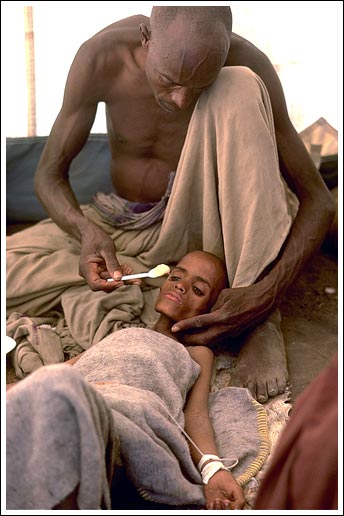
Of course it’s true that extreme poverty is pretty much incompatible with satisfaction and community. Malnutrition, illiteracy, and untreated disease are counterparts of extrme poverty and destroy happiness and community. But “non-affluence” isn’t the same as extreme poverty.

What everyone needs, at every level of income, is decent access to the components of a happy life: healthcare, nutrition, shelter, education, dignity, and security. These are what an earlier generation of development thinkers called basic needs. And it is self-evident how these fit into the possibility of a decent and satisfying life. But access to these goods isn’t equivalent to the American dream of affluence.

So here is a fairly profound question: what steps can be taken to promote the features of personal wellbeing and robust community relations that can make “non-affluence” a sustainable social ideal? And how can we help poor communities to strengthen their ability to nurture these positive values according to their own best instincts?

Food security

“Food security” is a crucial aspect of life, both for a population and a household. It can be defined in a variety of ways, but most fundamentally, it amounts to this: the existence of a set of economic and social arrangements on the basis of which a population or household is assured of a sufficient supply of foodstuffs to sustain a minimum but adequate nutrition level over a twelve-month period.

Food security can be put at risk in a variety of ways. Natural conditions can lead to a shortfall of grain production — flood, drought, or other natural disasters can reduce or destroy the crop across a wide region, leading to a shortfall of supply. Population increase can gradually reduce the grain-to-population ratio to the point where nutrition falls below the minimum required by the population or household. And, perhaps most importantly, prices can shift rapidly in the market for staple foods, leaving poor families without the ability to purchase a sufficient supply to assure the nutritional minimum. It is this aspect of the system that Amartya Sen highlights in his study of famine. And it is the circumstance that is most urgent in developing countries today in face of the steep and rapid rise in grain prices over the past year.

The results of a failure of food security are dire. Chronic malnutrition, sustained over months and years, has drastic effects on the health status of a population. Infant and child mortality increases sharply. Often the gender differences in health and mortality statistics widen. And economic productivity falls, as working families lack the strength and energy needed to labor productively. Famine is a more acute circumstance that arises when food shortfalls begin to result in widespread deaths in a region. The Great Bengal famine, the Ethiopian famine, the Great Leap Forward famine, and the famines in North Korea offer vivid and terrible examples of hunger in the twentieth century.

So what is needed to maintain food security in a poor nation? Some developing countries have aimed at food self-sufficiency — to enact policies in agriculture that assure that the country will produce enough staples to feed its population. Other countries have relied on a strategy of purchasing large amounts of staple foods on international markets. Here the strategy is to generate enough national income through exported manufactured goods to be able to purchase the internationally traded grain. This is the strategy recommended by neoliberal trade theory. If agriculture is a low value-added industry and the manufacture of electronic components is high value-added, neoliberals reason, then surely it makes sense for the country to generate the larger volume of income through the latter and purchase food with the proceeds.

This logic has given rise to several important problems, however. First is the vulnerability it creates for the nation in face of sharp price shocks. This is what we have seen in many countroes over the past year. And the second is the reality of extensive income inequalities in most developing countries — with the result that the “gains of trade” may not be sufficiently shared in the incomes of the poorest 40% to permit them to maintain household food security.

These considerations suggest the wisdom for developing countries to expend more resources on agricultural development (which often has an income-inequality narrowing effect) and a greater emphasis on national and regional food self-sufficiency.

Rising income inequality in China


Allan Wheatley writes an important article in Reuters this week about the situation of rising income inequalities in China as part and parcel of the booming economic growth the country has witness for the past two decades. Several key facts emerge from the piece: While spectacular affluence is emerging at the top end of China’s economic hierarchy, 204 million people lived on less than $1.25 per day in 2005. China’s Gini coefficient of income inequality rose from 40.7 in 1993 to 47.4 in 2004, according to an Asian Development Bank report — a remarkably steep and rapid rise. (This compares to a Gini coefficient of income inequality in India of only 36.2.) And inequalities of income between urban and rural people continue to rise. Wheatley indicates that some experts believe that this phenomenon is the result of both rapid economic growth and a set of policies by the Chinese government that favor efficiency over equity. And some experts believe that these rising inequalities are a significant source of risk for social stability in future decades.

Wheatley bases most of his article on the recent work of the World Bank’s chief economist, Justin Yifu Lin, formerly a leading professor at Peking University. Lin and colleagues have published a collection of papers titled China’s Dilemma, which attempts to identify the economic policies that have resulted in this sustained rise in income inequality. (The volume was co-published by Australian National University and Asian Pacific Press and the table of contents is available online.) As Wheatley summarizes the findings, the Chinese government’s policies concerning economic growth have favored “efficiency” and corporations over “equity” and workers. And Lin argues that state policies actually protect and subsidize corporations, resulting in a massive transfer of wealth and income to the most affluent.

All of this suggests to me the importance of returning to some of the important discussions of poverty and growth that were so dynamic in the 1970s. Development theorists such as Hollis Chenery (Redistribution with Growth) and Irma Adelman (Economic growth and social equity in developing countries) gave careful analysis to the institutional context of economic growth, and put forward a strong argument for the idea that poverty alleviation needs to be built into the growth strategy from the beginning. Both focused their attention on the institutions through which income is generated — largely property holdings in land for peasants — and argued that redistribution of property entitlements needed to be a structural feature of equitable economic growth.

It was neglect, not factual or policy weakness, that led to the eclipsing of this line of thought in development circles and World Bank thinking. The Washington Consensus essentially put aside the idea that there are alternative pathways of economic growth, some of which are more favorable to equity than others.

China’s current theory of economic development seems closer to neo-liberal orthodoxy than it does to a progressive “poor-first” policy mix that would have the most sustained impact on China’s poor.

(There is more discussion of the poverty-first approach to development thinking in an unpublished paper on my research site, Putting the Poor First.)